How I Turned a Messy Shopify Home Décor Store Into a High-Performing Shopify SEO Machine in Just 45 Days
A few months ago, I started working with a USA-based Shopify store in the home décor niche.
The products were beautiful, the craftsmanship was impressive — but the store had almost no visibility on search engines.
Despite spending on design, ads, and Shopify apps, organic growth was flat.
When I ran my first Shopify SEO audit, it became clear that the issue wasn’t the product…
it was the broken SEO foundation.
Everything beneath the surface needed a complete rebuild.
The First Shopify SEO Audit: A Website Built on Weak Ground
Within the first hour of the audit, I discovered why the store wasn’t growing.
The Shopify SEO structure was completely misaligned.
Here’s what I uncovered:
Thin product content with no search value
Duplicate content across dozens of product & collection URLs
Technical errors blocking crawlability
Core Web Vitals failing across the board
No structured data or Shopify schema
Poorly optimized collections
No internal linking
No content strategy
Weak keyword research
Missing blog content
No trust elements for conversions
This wasn’t just a poorly optimized store —
It was a Shopify site Google couldn’t understand.
The Turning Point: A Shopify SEO Roadmap That Actually Works
Before optimizing anything, I built a Shopify SEO roadmap that covered every foundational issue.
My roadmap included:
A full Shopify technical audit
URL cleanup across products & collections
Duplicate content removal
Improved site architecture
On-page SEO optimization
Product & collection content rebuild
Semantic keyword research
An internal linking map
Shopify structured data (schema) implementation
Blog & content planning
The strategy was simple:
Fix the roots → grow the results.
Technical Shopify SEO Fixes: Repairing the Engine First
The first 10 days were dedicated to repairing the technical structure.
Fixes included:
Removing index bloat
Fixing 404s and redirect chains
Improving speed & Core Web Vitals
Adding proper XML sitemaps
Fixing pagination
Improving crawl depth
Cleaning up unnecessary parameters
Within two weeks, Google’s crawl rate increased significantly.
The Shopify SEO engine was now healthy.
Content Cleanup: Making Shopify Content Useful for Google & Users
Next, I tackled the content side — the heart of Shopify SEO.
I fixed:
Thin product descriptions
Duplicate collection content
Weak or missing meta descriptions
Poor headings & title tags
Inconsistent formatting
I rewrote content with a focus on search intent, not filler text.
Suddenly, Google began understanding what each page was supposed to rank for.
Building High-Value Product Pages
Home décor buyers rely on inspiration + clarity.
As i know Web development, I rebuilt product pages with:
This boosted engagement and reduced bounce rate — a huge win for Shopify SEO.
Collection Page Optimization: The Real Shopify SEO Power
Most Shopify stores rely too much on product pages.
But in Shopify SEO, collections rank faster and convert better.
I rebuilt every collection with:
This is where the biggest ranking jumps happened.
Structured Data: Giving Shopify SEO a Voice Google Understands
I added full schema markup for:
Products
Collections
Blog posts
Breadcrumbs
This helped Google understand:
Prices
Variants
Reviews
Availability
Rich results started appearing almost instantly.
Content Strategy: The Missing Ingredient in Most Shopify SEO
The store had zero blogs, which meant no long-tail search traffic.
So I created a content strategy targeting:
“How to decorate” topics
Product-intent keywords
Style guides
Inspiration posts
This positioned the brand as a home décor authority, not just another Shopify store.
Internal Linking: The Silent Shopify SEO Power Move
Most Shopify stores ignore internal linking.
I didn’t.
I built an internal linking network connecting:
This strengthened topical authority and improved crawl paths.
Trust Signals: The Final Step to Turning Traffic Into Revenue
SEO traffic means nothing without trust.
So I integrated:
Verified product reviews
Shipping & return badges
Social proof
Better CTAs
Trust-focused microcopy
The store instantly felt more credible.
The Results: A Shopify SEO Transformation in 45 Days
Once the entire Shopify SEO framework was implemented, results followed fast:
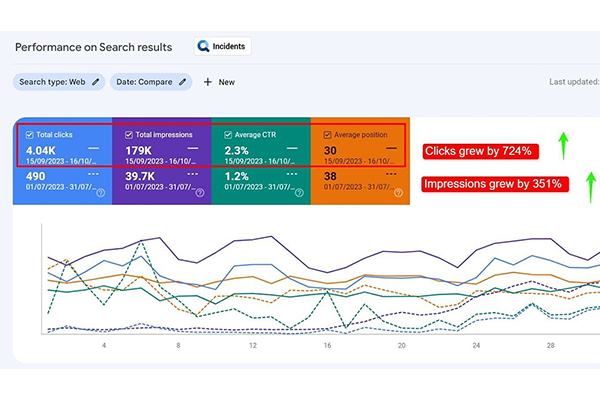
📈 Impressions: 40K → 179K
📈 Clicks: 490 → 4,000+
📈 Average Position: 38 → 30
No hacks.
No shortcuts.
Just proper Shopify SEO done right.
This was the result of:
The Biggest Lesson: Shopify SEO Isn’t Magic — It’s Execution
This project proved one thing:
Most Shopify stores don’t need fancy apps or redesigns.
They need:
When these align, Shopify SEO delivers results — every time.
Closing Note
This Shopify store went from invisible to competitive in just 45 days because the entire SEO foundation was rebuilt properly.
If you want, I can also create:
✅ A short LinkedIn post
✅ A carousel version
✅ A portfolio page layout
✅ A compressed 300–400 word version
Want same result in your store?
Contact now